Pre-Columbian Era
The First Navigators
Indigenous peoples navigated the Caribbean Sea and relied on Culebra's natural resources for their way of life.
The Culebra Insider Guide
Beyond the Shoreline
Many visitors come to Culebra for its crystal-clear waters, white-sand beaches, and breathtaking scenery. While the island's natural beauty is undeniable, Culebra is much more than a tropical destination. It is a close-knit community with a rich history, a resilient spirit, and a legacy shaped by generations of families who have proudly called this island home.
To truly know Culebra, one must look beyond its beaches and discover the stories of its people — the fishermen, teachers, community leaders, veterans, and families whose lives have shaped the island for generations. Understanding Culebra's past allows visitors to better appreciate the resilience, traditions, and deep sense of identity that continue to define the island today.
The turquoise waters, protected landscapes, and peaceful atmosphere that visitors enjoy are not simply gifts of nature. They are also the result of decades of perseverance, sacrifice, and a community's unwavering commitment to preserving one of the Caribbean's most extraordinary islands.
A Journey Through Time
Understanding Culebra's history becomes easier when viewed as a journey through time. These milestones highlight some of the most important events that shaped the island and the community visitors experience today.
Pre-Columbian Era
Indigenous peoples navigated the Caribbean Sea and relied on Culebra's natural resources for their way of life.
1880
The Spanish government officially established the town of Culebra under the leadership of Cayetano Escudero Sanz, encouraging families from mainland Puerto Rico to settle the island.
1901
The United States Navy established military operations on Culebra, beginning a period that would profoundly shape the island's history and its people.
1971–1975
The people of Culebra, led by community leaders including Ramón Feliciano (Monchín), organized peaceful protests and advocacy efforts that brought international attention to the island's struggle.
1975
Military exercises officially came to an end, marking a historic victory for the people of Culebra.
1975
Puerto Rico enacted Law 66, creating the Culebra Conservation and Development Authority (ACDEC) to help protect the island's natural resources, guide responsible development, and preserve Culebra's unique character.
Today
Culebra is recognized worldwide for its spectacular beaches, protected natural areas, rich cultural heritage, and the resilience of the community that has worked tirelessly to preserve this extraordinary island.
“The beauty of Culebra is not only found in its landscapes, but also in the history, resilience, and spirit of the people who have protected this island for generations.”
Origins
Long before Culebra became a world-renowned tourist destination, the island was home to Indigenous peoples who navigated the Caribbean Sea and relied on its rich natural resources for their way of life. Its strategic location between Puerto Rico and the Virgin Islands made Culebra an important point for navigation and maritime travel long before the arrival of modern settlers.
In 1880, the Spanish government officially established the town of Culebra under the leadership of Cayetano Escudero Sanz, encouraging families from mainland Puerto Rico to settle the island. These pioneering families laid the foundation for the close-knit community that continues to thrive today, shaping Culebra's culture, traditions, and enduring sense of identity.
1901 – 1975
One of the most significant chapters in Culebra's history began in the early twentieth century when the United States Navy established military operations on the island. For many years, large portions of Culebra were used for military training exercises and bombing practices, profoundly affecting both the island and its residents.
Despite these challenges, the people of Culebra never lost their love for their island or their determination to protect it. Residents, community leaders, and supporters worked tirelessly to preserve their community, safeguard its natural environment, and advocate for the well-being of future generations. Through peaceful advocacy, unity, and perseverance, their efforts ultimately led to the end of military exercises on the island.
Today, visitors enjoy some of the Caribbean's most beautiful natural landscapes thanks in part to those conservation efforts. Culebra's history is not only a story of hardship — it is also a story of courage, resilience, unity, and hope.
A Story of Resilience

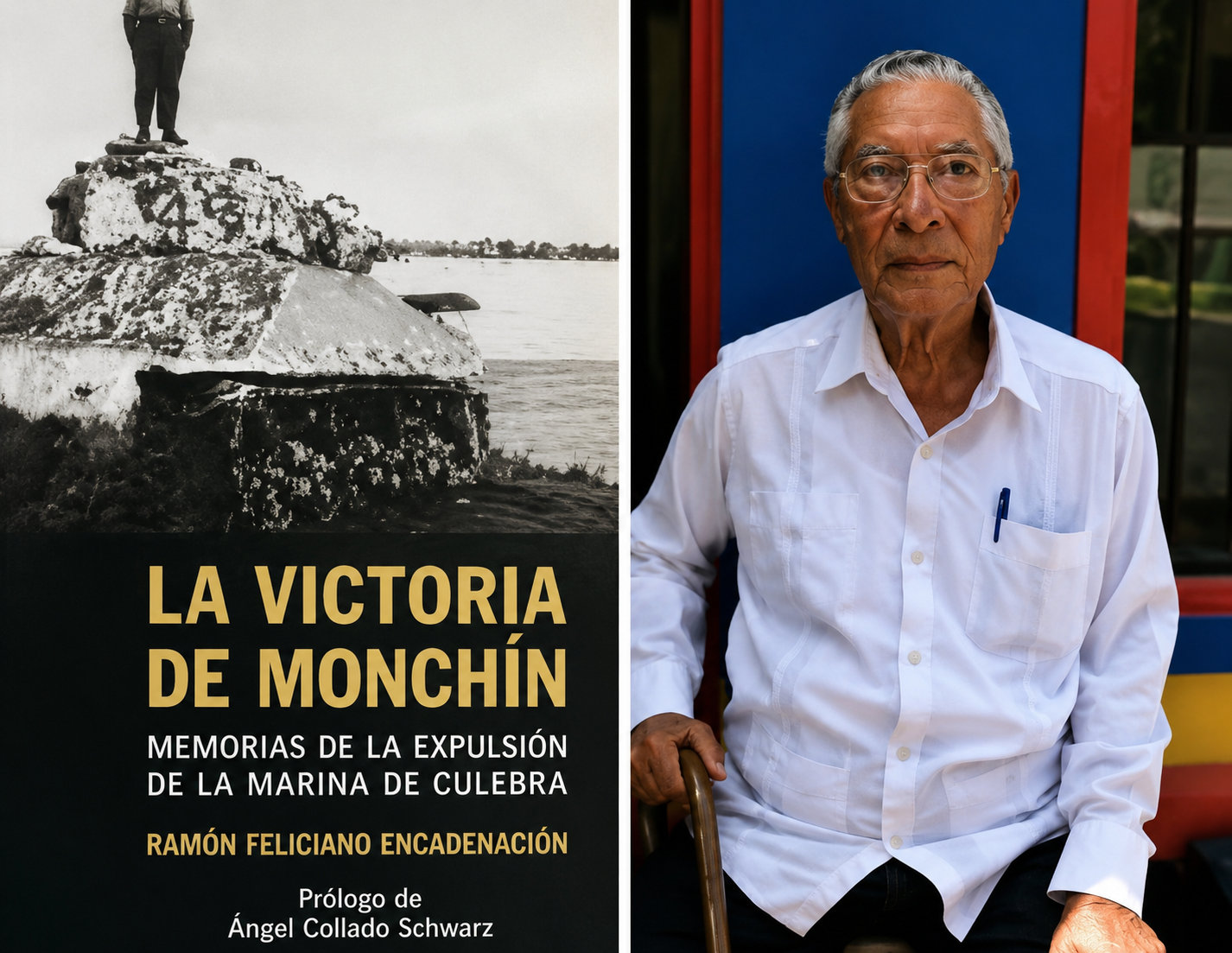
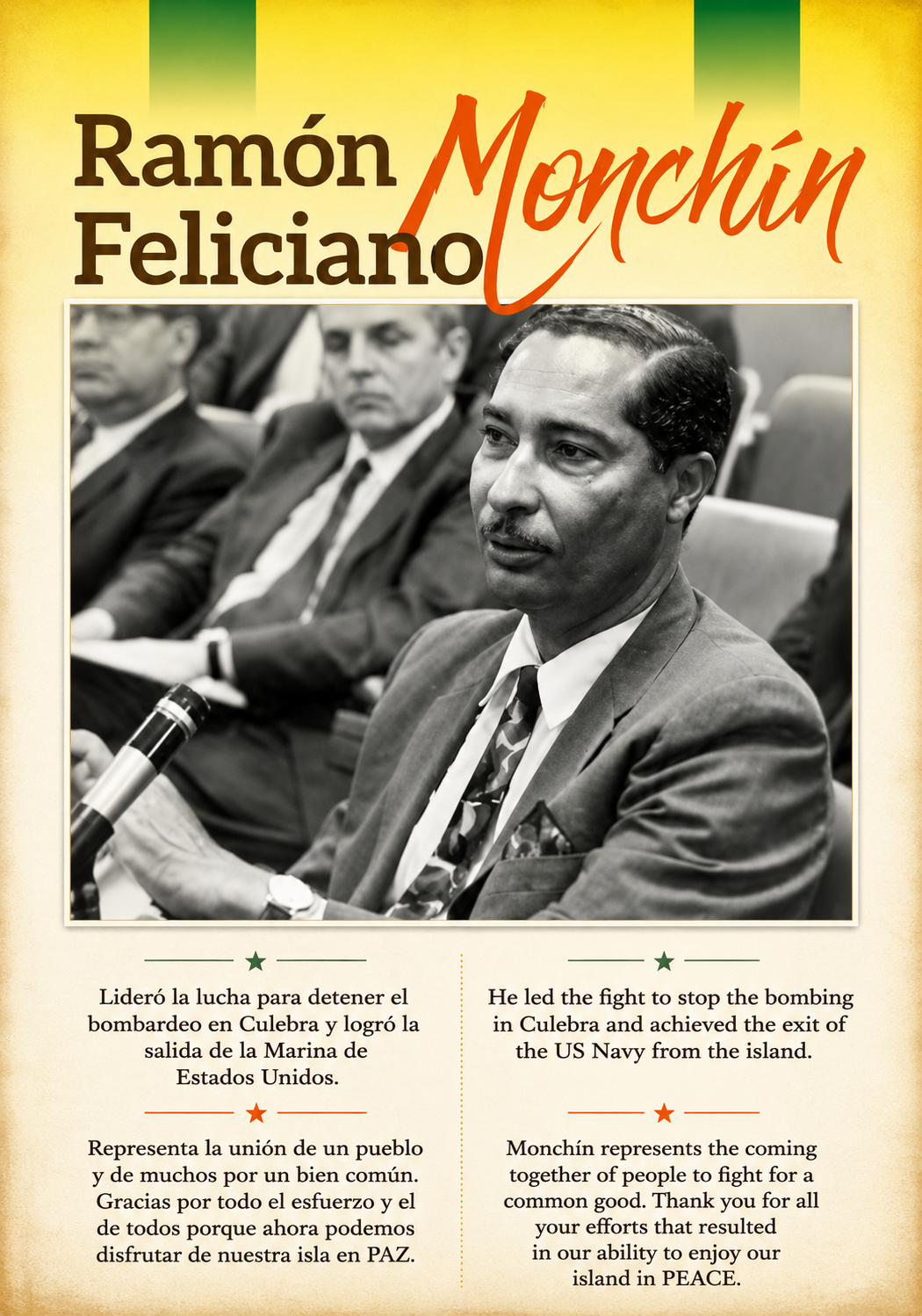
Ramón Feliciano is remembered by many as “The Culebran David,” a reference to the biblical story of David and Goliath. The comparison symbolizes how a small island community, with limited resources but extraordinary determination, stood against one of the world's most powerful nations.
Like David facing Goliath, the people of Culebra demonstrated courage, resilience, and an unwavering commitment to protecting their homeland. Through peaceful advocacy, community unity, and perseverance, they brought international attention to their cause and ultimately played a significant role in ending military exercises on the island.
For many residents, Ramón Feliciano became a symbol of leadership, courage, and dedication to the people of Culebra. His efforts helped preserve the island's natural beauty, cultural identity, and quality of life for future generations.
His legacy reminds us that even the smallest communities can create meaningful change when united by a common purpose.
The Legacy of Conservation
Culebra Conservation & Development Authority
The departure of the United States Navy marked a turning point in Culebra's history. Following years of community advocacy and peaceful resistance, efforts were made not only to protect the island from future military use, but also to ensure that its natural resources would be preserved for generations to come.
As part of that vision, Puerto Rico enacted Law 66, known as the Culebra Conservation and Development Act, which established the Culebra Conservation and Development Authority (ACDEC), a public governmental corporation dedicated to balancing conservation, responsible development, and the protection of the island's unique character.
Today, ACDEC plays an important role in safeguarding Culebra's natural and cultural resources. Its responsibilities include the administration of Flamenco Beach, one of the most celebrated beaches in the world, the review and endorsement of certain construction and development projects, land-use oversight, and the protection of environmentally sensitive areas.
The creation of ACDEC reflected a long-term commitment to ensuring that Culebra's future would be guided by conservation, sustainability, and responsible growth rather than uncontrolled development. For many residents, Law 66 remains one of the most significant achievements to emerge from the community's struggle following the Navy years.
Today, visitors enjoy pristine beaches, protected natural areas, and breathtaking landscapes thanks, in part, to the vision of those who fought not only for the Navy's departure, but also for the long-term conservation of Culebra.
The story of Culebra is therefore not only a story of resistance — it is also a story of stewardship, reflecting an ongoing commitment to protecting what many consider one of the Caribbean's most precious treasures.
The Temple of Culebra's Historical Memory
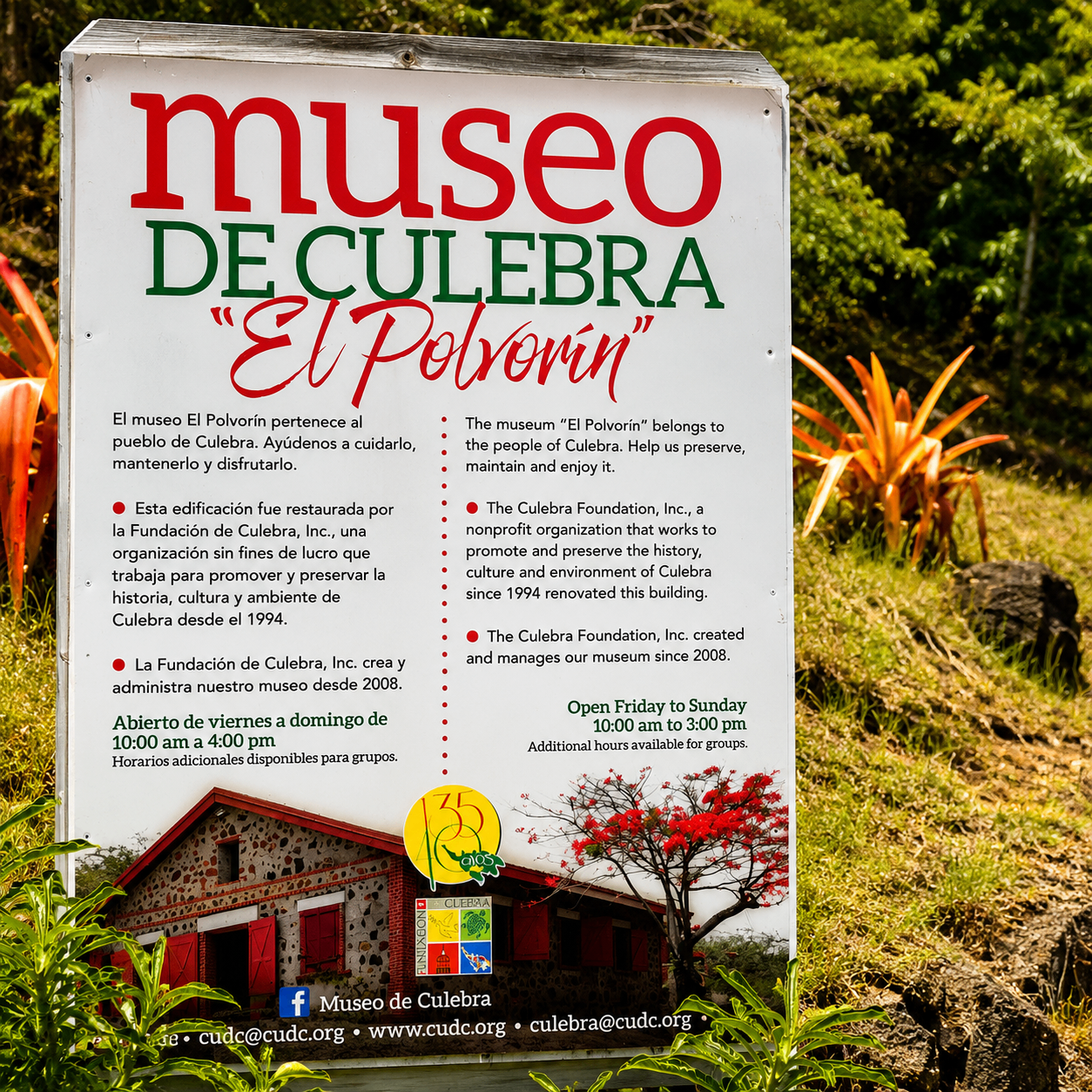
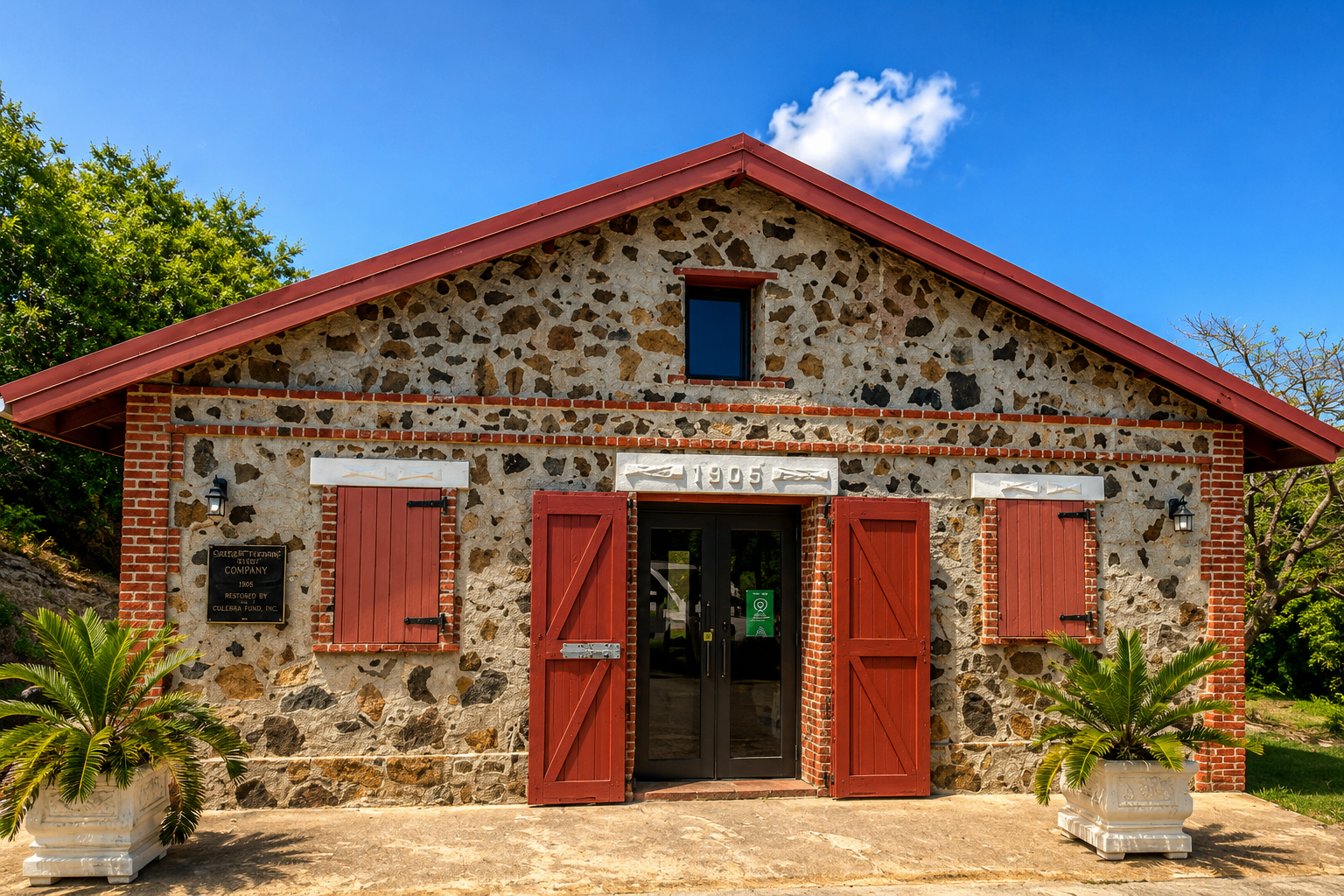
The El Polvorín Museum is the temple of Culebra's historical memory. More than just a museum, it is a place where the island's collective memory is preserved, honored, and shared with future generations.
Within its walls live the stories of fishermen, families, community leaders, teachers, veterans, and residents whose lives helped shape the Culebra we know today. Through photographs, historical documents, artifacts, and exhibits, visitors gain a deeper understanding of the island's history, culture, and the events that transformed its future.
“The beaches reveal the beauty of Culebra. El Polvorín reveals its soul.”
About the Museum
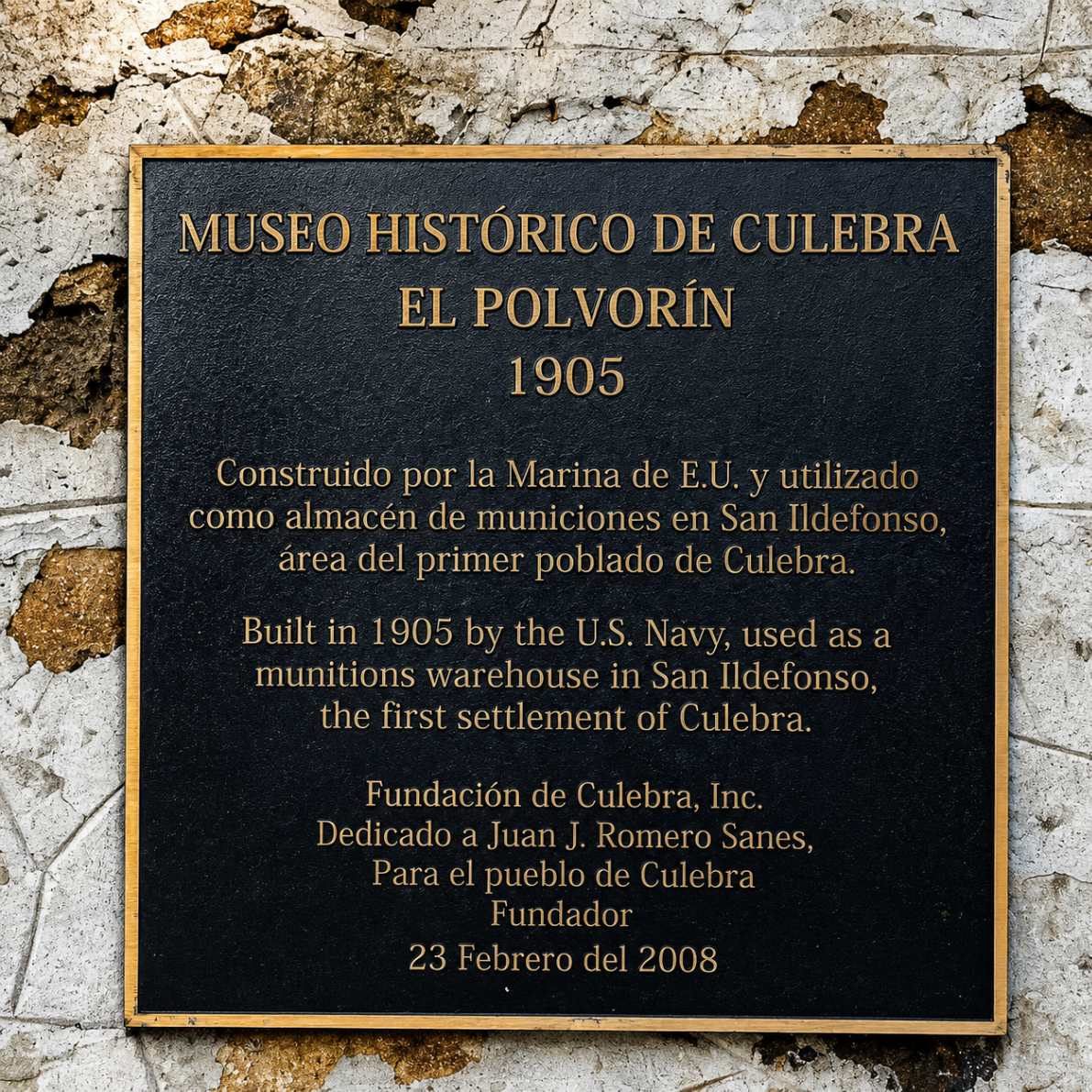
The museum preserves and shares Culebra's story through photographs, historical documents, exhibits, and artifacts that celebrate the island's rich cultural heritage.
Visitors can learn about:
Why Visit?
Many visitors come to Culebra for its beaches, but El Polvorín offers a deeper understanding of the island and its people. A visit to the museum helps tell the story behind the places you'll experience during your stay and provides valuable insight into the resilience, determination, and heritage of the Culebrense community.
What You'll Experience
A Personal Story
As a lifelong resident of Culebra and the granddaughter of one of the island's founding families, I have had the privilege of growing up surrounded by stories passed down from generation to generation. I come from the Márquez and Parrilla families, two of the founding families whose history has been closely intertwined with the development of Culebra since its earliest days. Much of the land originally granted to my ancestors was later divided among their descendants. Even today, streets such as Pedro Márquez and Joaquín Parrilla serve as lasting reminders of those early families whose lives became woven into the island's history.
Long before tourism became Culebra's primary source of income, the sea provided for its people. Fishing was not simply an occupation — it was a way of life.
One of my favorite stories came from my grandmother, who often told me about her father, a fisherman. As a little girl, she accompanied him on his fishing trips. In those days, fishermen sometimes used fishing methods that were common at the time but are no longer practiced today. After the fish floated to the surface, he would dive into the water without modern scuba equipment. With remarkable skill, he gathered as many fish as he could using both his hands and even his toes before returning to the boat. As a child, I could hardly imagine someone surfacing with so many fish at once, and that story has stayed with me throughout my life.
Many visitors are surprised to learn that Culebra's original settlement was not located where today's town center stands. The island's first community was established in San Ildefonso, an area that is now mostly rural and later became the site of the former U.S. Naval Camp. Knowing this helps us better understand how the island gradually evolved into the Culebra we know today.
Some of my happiest childhood memories are of Culebra's annual celebrations. Although they honored Our Lady of Mount Carmel (Virgen del Carmen), the island's patron saint, most of us simply knew them as the Carnival. Every July, around the feast day of July 16, the town came alive with music, colorful stages, delicious food, laughter, and families celebrating together for four or five unforgettable days.
One of the most beautiful traditions was the religious procession honoring the Virgen del Carmen. Her image was carried through the streets before being placed aboard beautifully decorated boats that sailed through the bay. Residents and visitors followed behind in a moving expression of faith and devotion. It was a tradition that brought the entire community together.
Calypso music filled the air throughout the festivities. One of the island's most beloved bands was La Sonora Culebrense, whose musicians were largely members of the Munet family, accompanied by Cucuito Félix and singer Edilberto Romero, father of the current Mayor, Edilberto Romero. Bands also traveled from nearby St. Thomas, bringing even more Caribbean rhythms to the celebration. By wonderful coincidence, the Carnival usually took place.
Preserving the Legacy
Every visitor who takes the time to learn about Culebra's history becomes part of the effort to preserve its legacy. By visiting El Polvorín Museum, supporting local businesses, respecting the island's natural areas, and appreciating its culture and traditions, visitors help honor the generations of residents who worked tirelessly to protect this extraordinary place.
Culebra is more than a destination. It is a community shaped by resilience, sacrifice, and hope. It is a story passed down from generation to generation. It is a legacy that continues to inspire all who visit.
Every person who experiences Culebra with respect and appreciation becomes part of that continuing story.